
In an early room the clock gets you. In a late room the battery does. But they are not two problems: both meters are paid for by the same thing, which is passes over the room, so there is only one resource to manage, and it is how much of the room you light twice.
That is the whole idea, and the rest of this page is why it is true. Two meters, the level timer and the Brr Brr Patapim Game battery, and one habit that empties them both faster than it needs to.
What each meter is actually measuring
The level timer is a fixed allowance. It starts when the room starts, it runs at the same rate whatever you do, and it does not care whether you are searching well or sitting still.
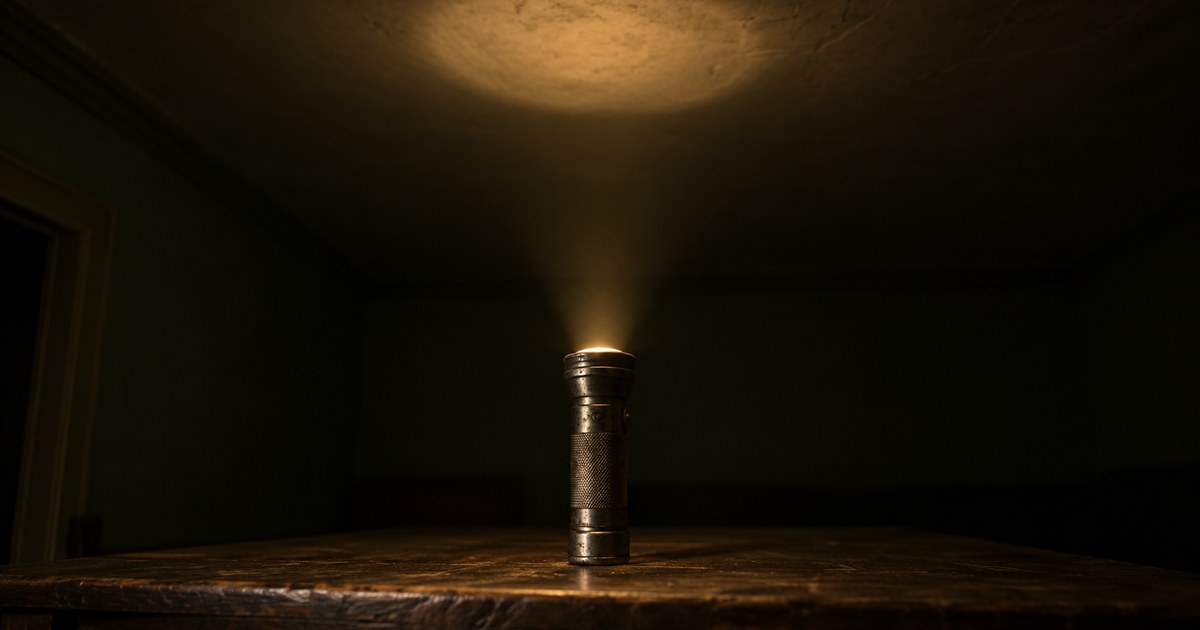
The flashlight battery is not like that. It drains while you have the light on and you are searching, and the store listing is blunt about what happens when it empties: run out and you are in the dark. So the clock measures how long you have been in the room, and the battery measures how much searching you have actually done in it.
Those are different questions with the same answer, because in practice the only thing you do in a room is search.
Which one runs out first in an early room
The clock, usually, and it rarely matters.
In the first rooms the room is small relative to the light and the pressure is low, so most attempts end one of two ways: you find Slim, or your beam lands on Brr Brr Patapim and the level ends. Neither of those is a resource problem. The battery is there, it is draining, and you are extremely unlikely to reach the bottom of it before something else decides the room.
This is why the early rooms feel like they have no economy at all, and why players who learn the game there arrive at the later rooms with no habit of spending carefully. The meters were always running. They just were not the thing that ended the attempt.
Which one runs out first in a late room
The battery, and it will feel like it happened suddenly.
The game’s own listing describes dynamic difficulty, with levels getting harder as Brr Brr Patapim becomes more aggressive. What that does to your search is force hesitation. You stop, you back off a lane, you re-check a strip you were not sure about. Every one of those is battery you spent without covering new ground, and unlike the clock, the battery has no floor under it. The clock at least ends the level cleanly. An empty battery leaves you in a dark room with time still on it, which is a worse place to be.
So the late-room failure is not that you ran out of time. It is that you spent your light on ground you had already lit.
Why they are really one resource
Here is the part worth taking away. Both meters are consumed by passes over the room, and a pass over ground you have already cleared buys you nothing.
Slim does not move. A strip you have swept stays swept, forever, as far as he is concerned. So when you sweep a strip a second time, you spend clock and you spend battery and you learn nothing, because the only thing that could have changed in that strip is Brr Brr Patapim, and he is the thing you are trying not to find.
That means the two meters give you exactly the same instruction: cover the room once, cleanly, in lanes, and then keep going forward. There is no situation where the clock wants one thing and the battery wants another. If you catch yourself trying to trade one against the other, the trade is imaginary. The seven tips for the later rooms works through the lane habit in more detail, and the how to play guide starts from the first room.
What Premium’s unlimited battery changes, and what it does not
Brr Brr Patapim Game is free with adverts, and there is one optional Premium upgrade. It gives unlimited battery, removes the adverts and gives what the listing calls instant level access, which in practice means no waiting for the battery to recharge or after a lost attempt.
Unlimited battery removes one of the two meters. It does not remove the reason the meter existed. The clock still runs, Brr Brr Patapim still moves to a new spot every few seconds, and a beam that lands on him still ends the level. If anything, unlimited battery makes sloppy searching slightly more tempting, because the cost of a wasted pass moves from two meters to one. A player who doubles back freely because the light is free still walks the beam into Patapim.
So it is a convenience and an advert remover, not a difficulty setting. If a purchase does not appear after you buy it, Apple’s own page on in-app purchases covers the restore steps, and that is the right place to start rather than the game.
The phone’s battery is a different battery
Worth saying because it confuses people, including adults watching over a shoulder. The battery meter in the game is part of the game. It has nothing to do with your iPhone’s charge.
It matters in one indirect way. A dark room is easier to read with the display brightness up, and a bright display is one of the larger drains on a phone. Apple’s support page explains that Low Power Mode reduces background activity to extend battery life, so if the phone drops into it mid session, charge the phone rather than fight the screen.
What this does not fix
Nothing here makes a room safe. Starting positions are randomized every attempt, so you can run a clean single pass and still meet Brr Brr Patapim halfway across it, and you can have Slim sitting in the final strip of a perfect sweep. Spending your light well means you reach the end of the room with something left, not that you get there.
That is the honest version. One resource, spent forward, and some rooms go badly anyway. If a room still feels unfair, why the game feels unfair separates what is unfair from what only feels it.
If you want to feel the difference, play one room deliberately in lanes and the next one however you like, and watch which meter complains first. The game is free on the App Store and a room takes about two minutes.